
Way back in 2006, while I was a resident artist at the Mattress Factory (working on my Tom Museum project), I began thinking up ideas for a theatrical art competition. I was watching the Iron Chef cooking show on Sundays, and thinking about a similar show for artists. I was also thinking about holiday contests that my relatives would hold, wacky homemade games of skill and chance. Everyone in the family participated, from the toddlers to grandma. We wrote everyone’s scores on a big chart.
I was inspired by reality TV, but I didn’t want a televised show. I wanted something where the audience could get up close, be in the midst of the action, and even be involved in the show. I wanted people to see the spontaneous invention of artists, as they try to figure out how to turn random junk materials into ART while the crowd watched. Initially, I called the project Art Olympic Theater, as the theatrics of the show was a key element that the judges were considering in selecting a winner. Eventually it was shortened to Art Olympics.
The Mattress Factory was eager to host my first run at the event, letting me use the lobby of the museum and helping with staffing, promotion, etc. Artists cut holes in walls, walls, floors and ceilings for every installation show at the museum, so the staff didn’t mind if things got a little banged up. I spent a lot of time finding sponsors for the event. I wanted to make the show into a big art party. There were donations of food, beer, live music, and materials. Friends from my puppetry projects, Mike Cuccaro and Liz Hammond, helped to run the show. Larry Rippel documented the event.
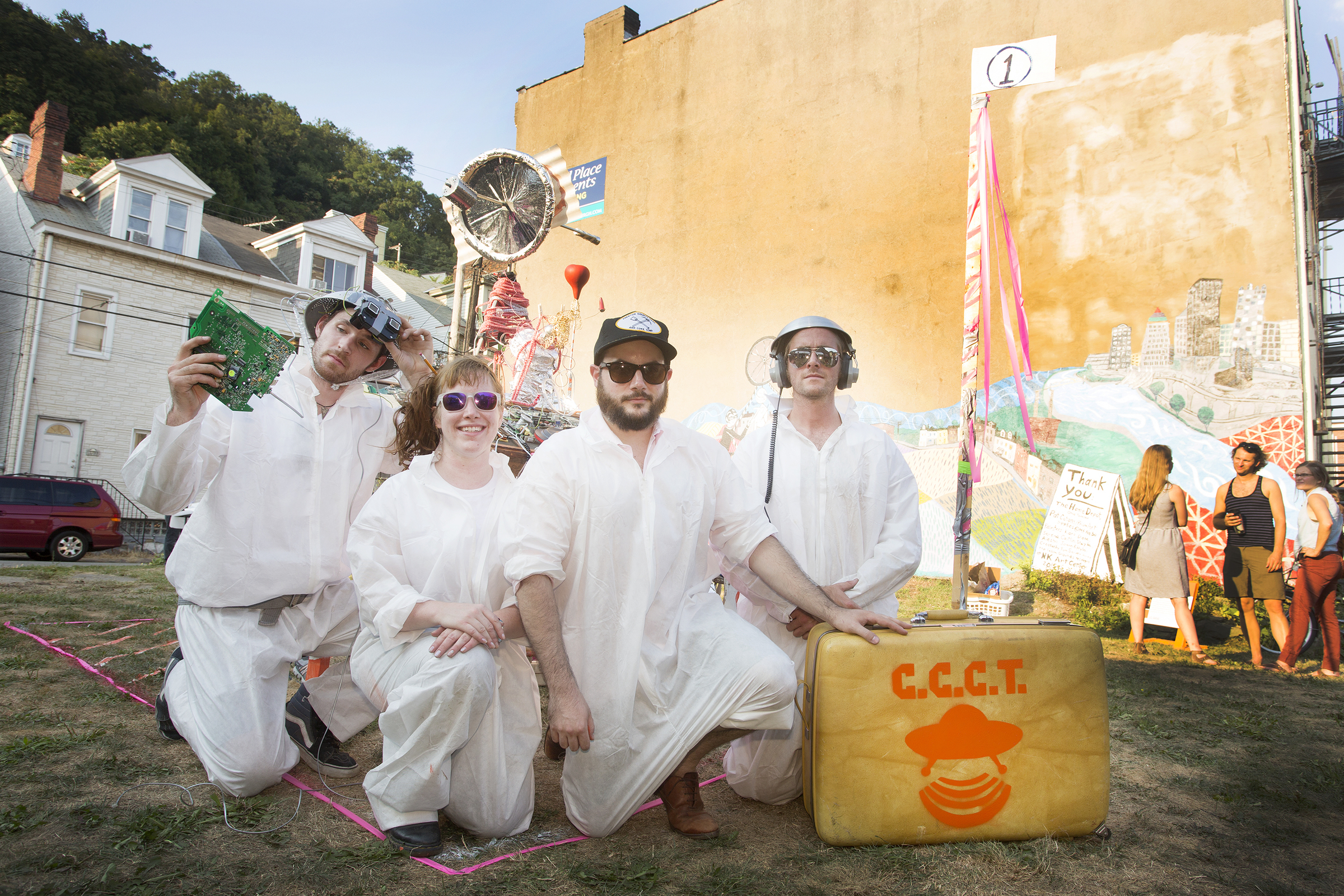
A big part of the event is watching the collaboration that takes place within each team. I chose a leader for each team, who then selects three people to work with them. The leader is generally a visual or theater artist. The leaders are free to select whomever they would like to complete on their team. They may choose a magician, engineer, plumber, etc. Each team is asked to present an artist statement at the beginning of the contest. One of the judging categories involves rating how they adhere to their statement throughout the show. Three teams compete in a contest that lasts two hours.
Each team has a space to work in, a square area of floor covered with a drop cloth. The audience is not permitted to step in the team spaces, unless team members invite them in. In this way, audience members can become collaborators in the show. On one occasion, a team created an art school, moving audience members through their space and letting them be involved in painting and music making.
Each team space has a pile of junk within it at the start of the show. Teams are judged on how creatively they use this junk. Another category for judges is determining how well each team follows the rules. The rules are mostly safety-based, preventing teams from using open flame and other methods that would be dangerous in a crowd.
During the shows, the emcee team interviews audience members to get their reactions. Some audience members compete in a smaller version of the Art Olympics during a half-time show competition.
At the end of the contest, a judging panel consisting of arts professionals announces their final scores and a winning team is selected.
On Friday, October 25th, the 11th Art Olympics show will happen during the Pittsburgh Cultural Trust Gallery Crawl. The show will be presented in partnership with the Associated Artists of Pittsburgh 110th Annual Exhibition at SPACE Gallery. More information on this year’s event will be posted soon!



 Tom Sarver